Childhood Christmas memories from northern Norway
In my childhood, at the turn of the twentieth century, life felt simple. And the small joys of Christmas lifted our spirits — and delivered us safely into the new year.

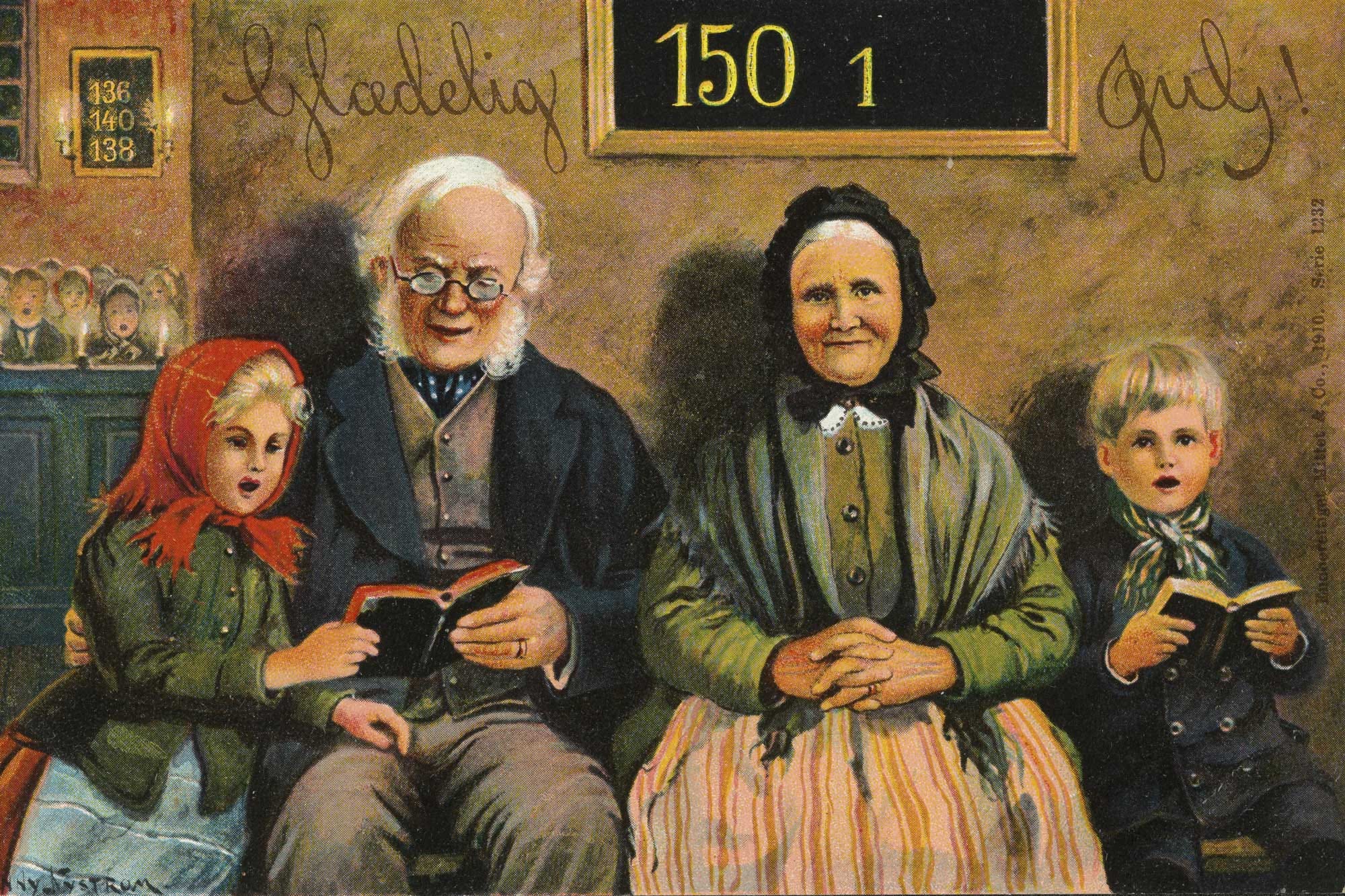
This post is based on childhood memories by Othilie Johnsen, born in 1894 in Kiby, Finnmark, Thomas Johansen, born in 1883 in Kvalnes, Nordland, and Mimmi Benjaminsen, born in 1894 in Værøy, Nordland — all from northern Norway, and collected in the 1960s. The text is written in the first person to represent the lives of our ancestors.
We were rich in other ways
I have happy memories of my childhood. We didn’t have much in the way of gold or riches, but I can’t say that we ever felt poor. As long as we had food on the table and clothes to keep us warm, we were happy and felt blessed.
My parents were honest and hardworking, and I admire them for their life’s work. In my eyes, there was nothing they could not do, and with their own hands they created almost everything we owned.
Christmas
Christmas was an exciting time for us children. Outside it was dark and cold, but inside our simple home there was light, both from the fire and in a spiritual sense.
The weeks leading up to the big day were full of hustle and bustle. There was lots of activity all year round, but Christmas came with something special. It was like a rush that carried us through the darkest days of winter — and delivered us safely into the new year.
The travelling salesmen
Every year, as regular as clockwork, travelling salesmen came knocking on our door just before Christmas. Many of them had walked a long way, carrying their wares from house to house.
We children watched intently as they opened their magical bags. Colourful paper and shiny objects fired our imagination.
We almost burst with pride if Father went to get his wallet to buy something. Later, Mother let us admire the treasures for a short while, before putting them into the large corner cabinet. If it was not too late in the day, we rushed over to our neighbours to share our exciting news.
Trivial things gave us so much joy back then. Nothing is more beautiful than the look of joy on a child’s face, or a feeling of contentment and pride.
Christmas cards and gifts
Sending Christmas cards was a new custom in our community at the turn of the twentieth century. To ensure a reply before Christmas, it was important to send them early.
The teenagers were the most active. When Christmas came, they counted the cards they had received — and compared the number and artwork with their friends.
It was not common to give each other Christmas presents, but the children often got something new, something we needed. It could be a pair of boots, socks, or mittens.
No Christmas tree
Today, we often think of the Christmas tree as the centre of our decorations. But in my childhood, it was quite unheard of. People saw the tree as unchristian, a sign of idolatry.
It is strange how customs and beliefs slowly change, and how new generations adopt new ways.
Christmas preparations
Today, we spend more and more of the pre-Christmas weeks and days in shops. This can stand as a symbol of how different our society has become — and it has all happened during my lifetime.
In the old world, people made and prepared everything at home with their own two hands.
A major task was preparing enough Christmas food to last throughout the season. Even for families with limited resources, the food had to represent something different from everyday life. The Christmas preparations gave people a sense of dignity and pride.
Christmas beer and dram
My father made the Christmas beer and the Christmas dram himself. This was quite a process, and it took a long time. He made both drinks from the farm’s own produce.
He made the Christmas beer using sacks of barley. To start the sprouting process — the first step in turning the grain into malt — he put the sacks into the creek to soak for a day or two.
Making beer had an air of secrecy about it, and each family added their own magic to the final brew.
As I remember it, Father made the dram by mixing potatoes with yeast made from hops and flour. After boiling the potatoes, he mashed them with the water. Then he added the yeast to the watery mash — and set it all aside to ferment until it was ready for distillation.
The finished drink was strong, and to soften the blow, he offered one or two pieces of sugar with each small glass of dram.
Christmas Eve
In our home, Christmas started at 4 o’clock on Christmas Eve. Mother prepared the table and served meat, rich broth, and flatbread.
There was no regular dinner at noon that day, and we went to the table extra hungry.
We dunked pieces of flatbread in the broth — and Mother let us have as much meat as we could manage.
Father read prayers before and after the meal.
Next, we all had a rest, and everything and everyone had to be quiet. My parents only left a simple candle burning.
But by 6 o’clock, we were all awake and alert again, ready for the sound of distant church bells. Both young and old listened quietly, and when the bells fell silent, my father read the story of the Nativity.
Later came the highlight of the day: the extra-rich, tasty Christmas porridge. On top, we had sugar, cinnamon, and a big lump of butter. And again, Mother let us eat as much as we wanted. The two meals on Christmas Eve were pure bliss.
Christmas Day
Back then, there were not enough priests to cover every parish, so the priests had to alternate. If it was our year to have the priest on Christmas Day, we all went to church. If not, my father read from the Bible, and we sang hymns galore.
Except for the possible trip to the church, no one could go outside on this day; everything was to be quiet. We children were not happy about this — and struggled to keep still.
Also on this day, rich food found its way onto the table, and the meals kept us busy for a while.
Let the celebrations begin
On 26 December, the world opened once again. People travelled from house to house, often on and off until the thirteenth day of Christmas.
There was food, there were toasts, and sometimes a wedding before the year was out.
And then a new cycle began
When the holiday celebrations ended on 6 January, we were ready for the new year. January came with a renewed promise of spring, and of the bright sunlight of summer.
All along the coast, the men grew restless and started preparing for the winter fishing expeditions. When they left, the womenfolk of the community once again took full charge of the many duties on the farm.
Happy childhood memories
Our modern-day life may have made everyday life easier, but I remember my simple childhood Christmases with great joy. Just like the treasures in the corner cabinet, I store the memories in my heart. I hold dear my memories of my beloved mother and father, my siblings, my grandparents, and all the great people who once enriched my life so very much.
Eidnes, Asbjørn (ed). I manns minne — Nord-Norge. Nasjonalforeningen for Folkehelsen. Det Norske Samlaget 1973.

