
The muskox | A newcomer in the Norwegian landscape
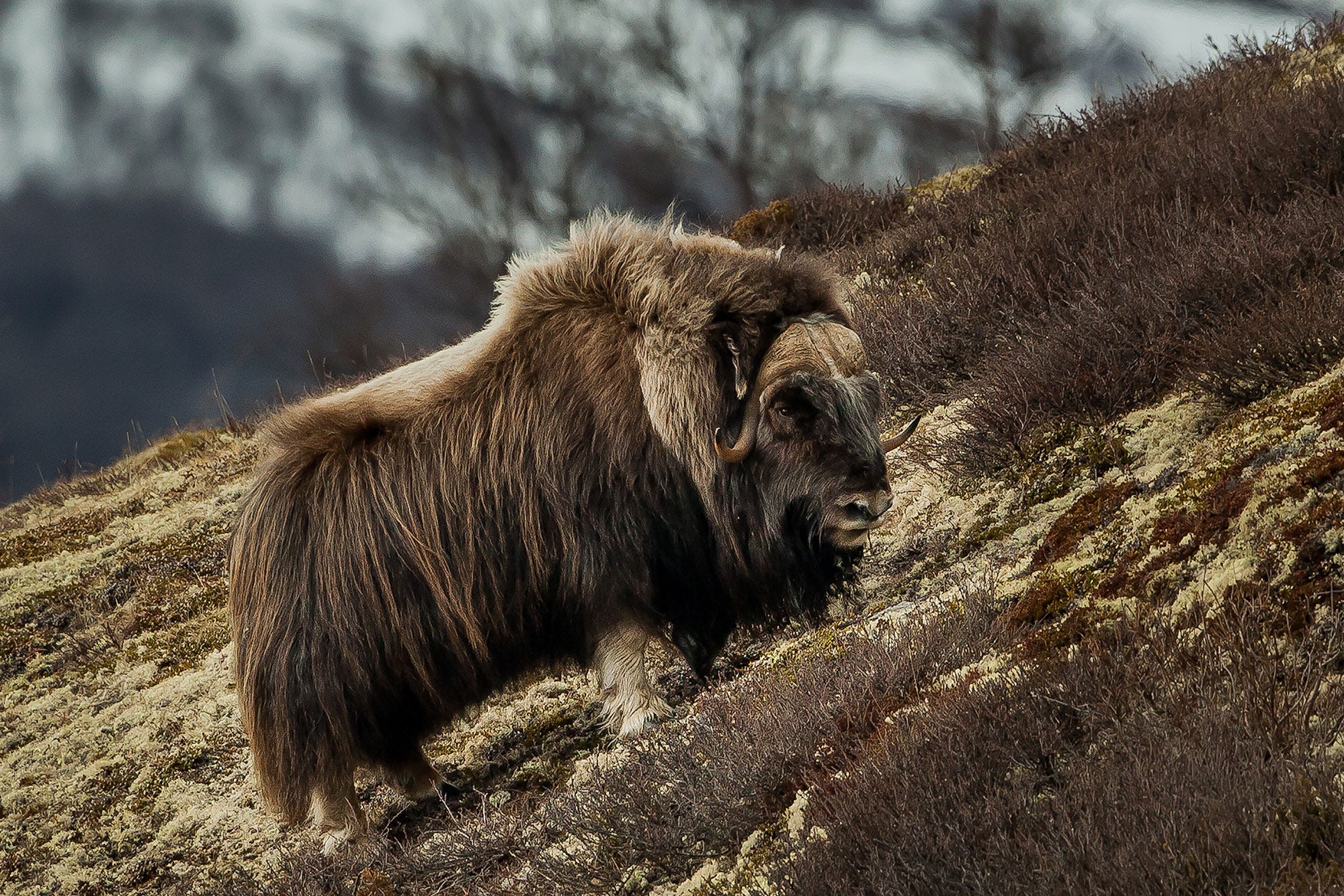
The Norwegians rarely admit alien species into their fauna, with one notable exception: the muskox — which was first welcomed back to mainland Norway from Greenland in 1924.

Muskox fossils
In 1913, Norwegian railway workers found muskox fossils in the mountainous region of Dovre in Oppland, central Norway. The fossils date back to warmer intermittent periods during the ice ages, long before the first humans arrived in this part of the world. Human history in Norway only began after the end of the most recent ice age, some 11,500 years ago. Scientists do not believe that the muskox existed in Scandinavia between then and modern times.
Muskox origins
The muskox species originated in the temperate highlands of Central Asia. Later, it made the Arctic and the permafrost tundra its prime habitat.
Through the millennia, the muskox expanded its territories along the edge of the treacherous ice age glaciers, across Europe, Asia, North America, and Greenland.
Almost extinct
By the 1920s, the muskox had vanished from most of its historical habitats and was on the brink of extinction, with only a few herds surviving in Arctic Canada and on Greenland’s tundra.
The Norwegians decided to help, and between 1924 and 1927, they moved 12 individuals from Greenland to Gurskøya, an island in the region of Møre og Romsdal on Norway’s western coast. Sadly, they all died.
In 1932, enthusiasts released 12 individuals from Greenland in the previously mentioned region of Dovre. All were illegally hunted and killed during the Second World War.
While Gurskøya lay exposed on Norway’s storm‑beaten western coast, Dovre’s inland mountains offered a harsher but more stable environment, closer to the muskox’s natural habitat.
Between 1947 and 1953, a third, successful attempt brought 21 muskox individuals from Greenland to Dovre.
Thriving
Despite occasional setbacks, the Norwegian muskox population has since survived, flourished, and grown in number. In 2019, the Dovre herd numbered 237 bulls, cows, and calves.
Over the years, a few strays moved east to Femundsmarka and Härjedalen on the Swedish border and settled there.
Beware the danger
When visiting Norway, you can witness the magnificent muskox in its natural habitat; however, we strongly advise you to do so on a guided tour. Heed all local advice — and be safe rather than sorry.
Lundh, Nils G. (editor). Moskus. Sør-Trøndelag fylke – Länsstyrelsen i Jämtlands län, 1992.