
Norwegian food and drink | The Viking pizza
The concept of pizza is not new to Norwegian culinary tradition; even the Vikings had their own version.

National dish
Today, the Norwegians consume pizza like never before, jokingly calling it their new national dish. But as Norwegian ethnologist Astri Riddervold (1925–2019) explained, the ancient Norwegians had their own version of pizza — the brauddiskr or brødtallerken, meaning bread-dish — prepared more than a thousand years ago. She called it the Viking pizza.
According to Riddervold, the Icelandic saga writer Snorri Sturluson (AD 1179–1241) used the term brauddiskr in his works.
Bread-dish
Since the introduction of Scandinavian agriculture — from around 4000 BC onwards — the Norwegians have eaten bread in various forms.
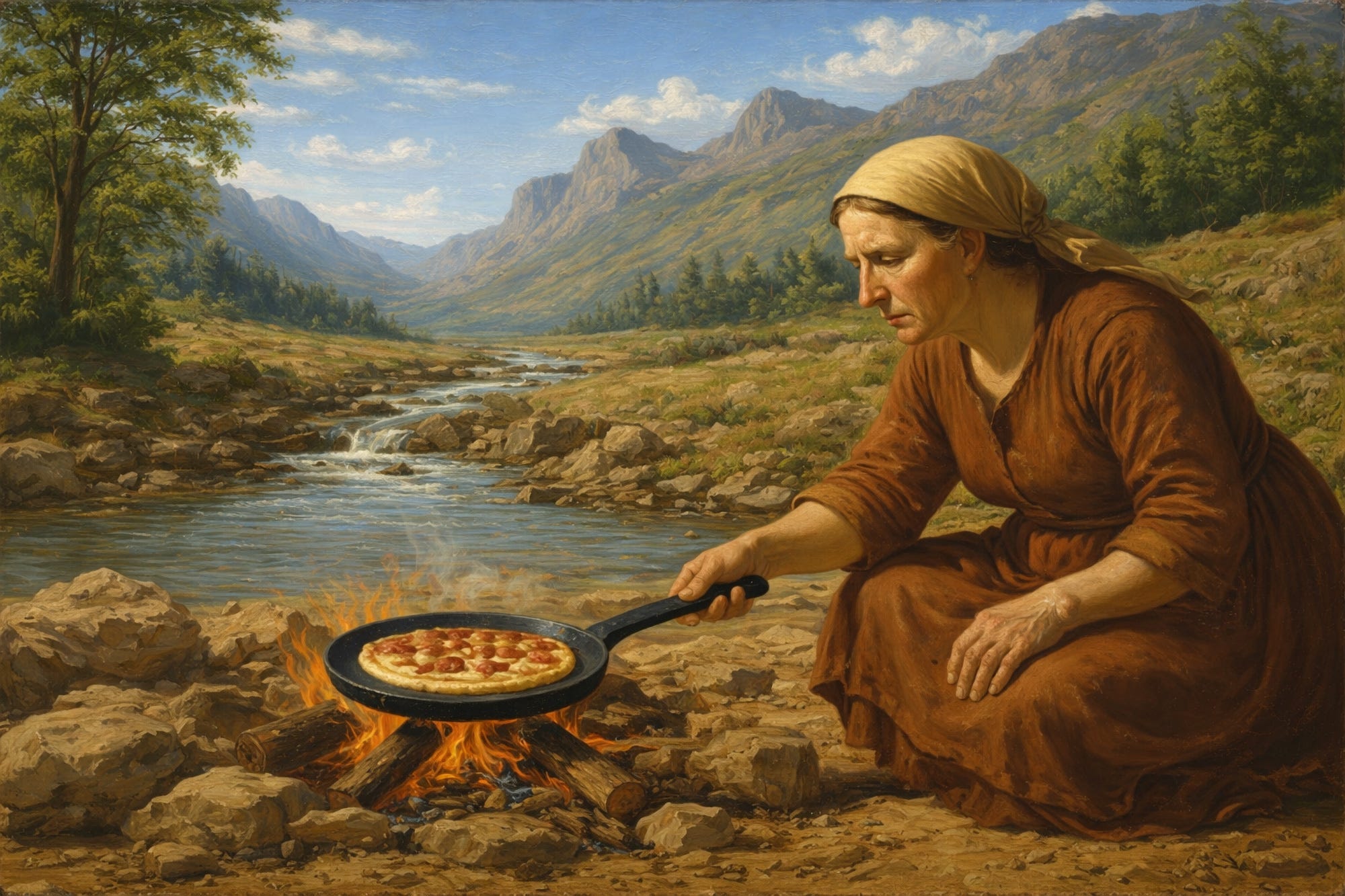
During the excavation of the Oseberg Viking ship from the AD 800s, archaeologists found round, flat metal pans with long handles. These are believed to have been used to prepare the bread-dish — the Viking pizza — by placing them over the fire. In earlier millennia, flat stones were likely used instead.
Much like with the Italian pizza, the mistress of the ancient Norwegian household topped the bread with whatever ingredients she had available. These could include cheese, eggs, cooked, cured or salted meat or fish, and more. She first prepared the eggs by covering them with hot embers from the fireplace.
Astri Riddervold believed that the bread-dish was the staple grain-based food in everyday life among the Norwegian farming population of earlier times.
While the Italians mainly use wheat for their pizza dough, the Vikings used barley or rye.
Flatbread and lefse
From the AD 1200s onwards came change; now the flatbread (flatbrød) reigned supreme, alongside other grain-based dishes like porridge (grøt) and lefse, a soft type of flatbread. Both the flatbread and the lefse were also made using a flat iron griddle (takke) with a fire or hot embers underneath.
The women of the household made large stacks of flatbread once or twice a year, often baking for several days in a row. The bread was stored in the food storehouse (stabbur) and — if kept properly — could remain edible for a very long time.
To produce enough flatbread for six months or an entire year in one go, it was essential to have access to large amounts of flour. This became possible with the wider introduction of large watermills, managed by the men on the farm.
Before this time, flour was ground using simple hand mills. This was hard work — a task generally performed by the women — who prepared just enough flour to bake the bread needed for the day.
Interestingly, another English word for a hand mill is quern, which is the same as the Norwegian word kvern (mill and hand mill).
Today, the oven-baked yeast bread is the most common variation among the Norwegians. However, it wasn’t until the late 1800s and early 1900s, when cast iron ovens became the norm in the Norwegian households, that oven-baked bread truly began to dominate.
Pizza lovers
The Viking bread-dish is excellent news for all of today’s pizza lovers. When we enjoy bread topped with whatever we have on hand, we are simply continuing an ancient Scandinavian tradition — one observed by the Vikings and beyond. This is something to think about, the next time you invite family and friends over for a lovely Norwegian feast.
Riddervold, Astri and Ording, Ebbe. Vikingpizza – Pizza på gammelmåten. nrk.no. | norgeshistorie.no.